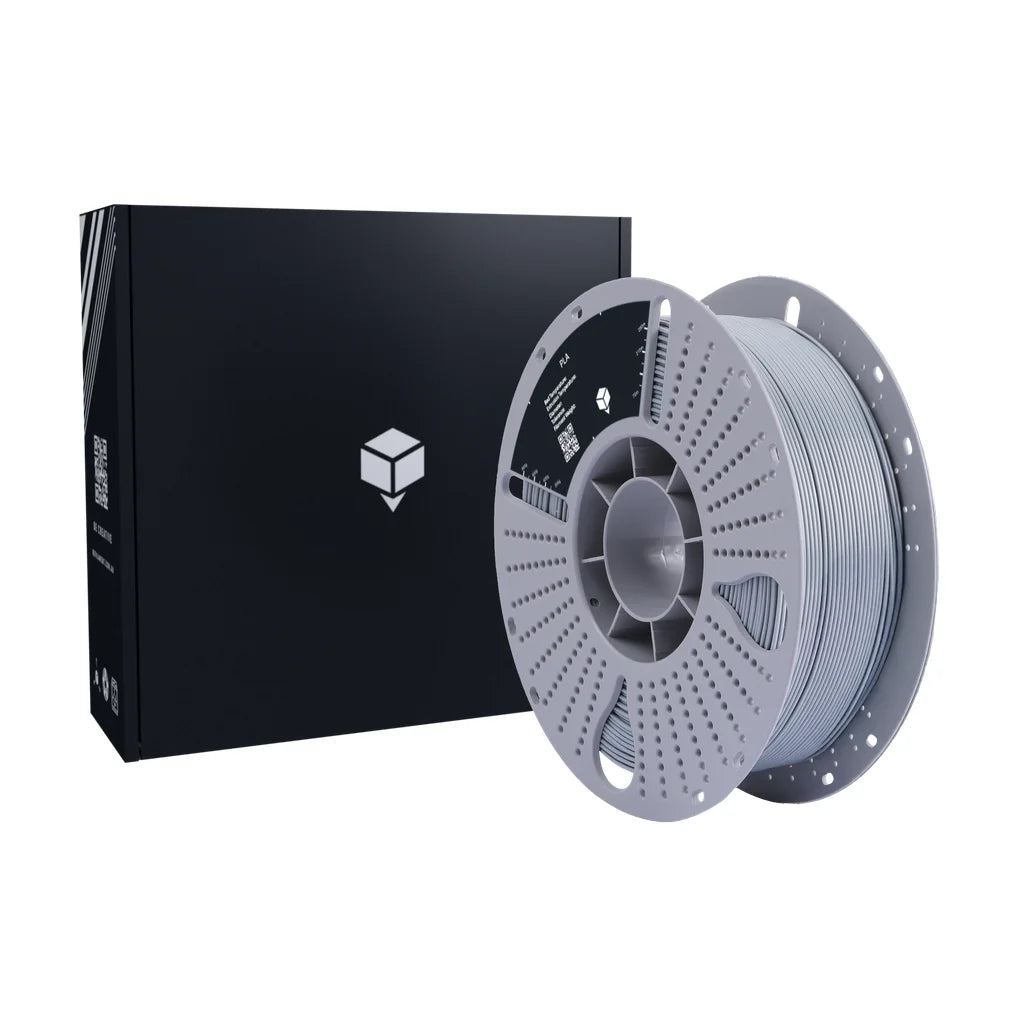

Collection: ABS

Tough and heat-resistant, ABS is perfect for creating durable, impact-resistant parts. It's a top choice for functional prototypes and engineering applications that require high strength and performance.

15 products

About ABS Filament

ABS (Acrylonitrile Butadiene Styrene) is a durable, impact-resistant thermoplastic widely used in professional 3D printing and manufacturing. Known for its excellent mechanical properties, ABS offers superior strength and heat resistance compared to PLA, making it suitable for functional parts that need to withstand stress and elevated temperatures.

ABS is the same material used in LEGO bricks, automotive components, and consumer electronics housings. It provides a smooth, professional surface finish and can be easily post-processed through sanding, acetone smoothing, or painting. The material's toughness and durability make it a preferred choice for engineering applications, tooling, jigs, fixtures, and end-use parts. Our ABS filament is manufactured to tight tolerances of ±0.02mm at 1.75mm diameter for consistent, reliable performance.

While ABS requires more attention to print settings than PLA, it rewards users with parts that maintain dimensional stability under heat, resist impact without shattering, and can be refined to a high-quality finish. Its slight flexibility prevents brittle failure, while its strength makes it suitable for functional mechanical assemblies and parts subject to regular use.

When to Choose ABS Filament

ABS excels in applications where mechanical strength, heat resistance, and durability are priorities. It's ideal for functional prototypes, mechanical parts, automotive components, enclosures for electronics, and tooling that will experience regular wear or elevated temperatures.

Choose ABS when you need parts that can withstand impacts without cracking, endure temperatures up to 90-100°C without deforming, or require post-processing for a professional finish. It's commonly used for replacement parts, custom fixtures, RC vehicle components, and assemblies with moving parts that experience friction or stress.

ABS is well-suited for intermediate to advanced users who have printers with heated beds and ideally enclosed build chambers. It's not the best choice for decorative prints where fine detail is paramount, or for beginners who want the easiest possible printing experience. ABS also emits fumes during printing, so proper ventilation is essential.

Consider alternatives if you're printing items for food contact, outdoor use with UV exposure, or if you lack adequate ventilation. For simple prototypes or models that don't require strength, PLA may be more appropriate.

ABS vs Alternative Filaments

Understanding how ABS compares to other common filaments helps you select the right material for your application. While ABS offers excellent mechanical properties, other materials may be better suited depending on your specific requirements.

Property ABS PLA PETG ASA
Durability High impact resistance Brittle under stress Good impact resistance High impact resistance
Heat Resistance 90-100°C 50-60°C 70-80°C 95-100°C
Print Difficulty Moderate to hard Easy Moderate Moderate to hard
Typical Applications Functional parts, tooling Models, prototypes Mechanical parts, containers Outdoor parts, automotive
Post-Processing Excellent (acetone vapour) Limited Moderate Excellent (acetone vapour)

PLA is easier to print and better for visual models, but lacks the strength and heat resistance needed for functional parts. PETG offers a middle ground with better temperature resistance than PLA and easier printing than ABS, though it doesn't acetone-smooth. ASA is similar to ABS but with superior UV resistance, making it the better choice for outdoor applications.

If ABS isn't the right choice for your application, explore our PLA, PETG, or ASA filament collections for alternative materials.

Printing ABS Successfully

ABS requires careful attention to temperature control and environmental conditions to achieve reliable results. The material is more demanding than PLA but delivers superior functional parts when printed correctly.

Temperature settings: Nozzle temperatures typically range from 230-270°C, with most users finding success around 240-250°C. Bed temperature should be set between 100-120°C, with 110°C being a common starting point. Higher bed temperatures improve first-layer adhesion and reduce warping.

Environment and hardware: An enclosed build chamber is highly recommended to maintain consistent ambient temperature and prevent warping from temperature fluctuations. Without an enclosure, parts are prone to corner lifting and layer separation. A heated bed with good adhesion surface (PEI, ABS slurry, or hairspray on glass) is essential. Disable part cooling fans or run them at minimal speed, as ABS benefits from slow, even cooling.

Common challenges: Warping and layer adhesion issues are the primary concerns with ABS. Minimize warping by ensuring the bed is level, the first layer is properly squished, and ambient temperature remains stable. Use a brim or raft for parts with small contact areas. If layers aren't bonding well, increase nozzle temperature in 5°C increments. Ensure proper ventilation as ABS emits styrene fumes during printing.

Printer Compatibility

ABS can be printed on most FDM printers, but certain hardware features significantly improve success rates and print quality.

  • Enclosed printers: Highly recommended. Printers like the Prusa MK4S with enclosure kit, Bambu Lab P1S/X1C, and Creality K1 series maintain stable temperatures and prevent warping. Even budget enclosures or DIY solutions improve results dramatically.
  • Open-frame printers: Can print ABS but with greater difficulty. Warping is more common, and larger prints may fail. Success depends on ambient room temperature and part geometry. Consider adding an enclosure for better results.
  • Direct drive vs Bowden: Both work well with ABS. Direct drive offers slightly more consistent extrusion, but properly tuned Bowden systems print ABS reliably. Retraction settings may need adjustment for Bowden setups.
  • Heated bed requirement: Essential. Printers without heated beds cannot reliably print ABS due to warping issues.

Most modern printers from Prusa, Bambu Lab, Creality, AnyCubic, and Elegoo can print ABS when properly configured. Check that your printer can maintain bed temperatures of at least 100°C and nozzle temperatures up to 270°C.

ABS Filament FAQs

ABS emits styrene fumes when heated, which can cause irritation and have long-term health effects with repeated exposure. Always print in a well-ventilated area, use an enclosure with ventilation/filtration, or direct fumes outside. Avoid prolonged exposure in enclosed spaces without ventilation.
Warping is prevented through stable ambient temperature (enclosure), high bed temperature (100-120°C), proper bed adhesion (PEI sheet, ABS slurry, or hairspray), and minimising cooling fans. A properly levelled bed and good first-layer squish are also critical for preventing corner lifting.
Yes, ABS can be smoothed using acetone vapour treatment, which dissolves the surface layer and creates a glossy, professional finish. You can also sand ABS easily and apply primer and paint for a polished look. This makes ABS ideal for parts requiring a refined appearance.
Store ABS in an airtight container with desiccant to prevent moisture absorption. While ABS is less hygroscopic than nylon or PETG, it can still absorb moisture over time, leading to printing issues like bubbling and poor layer adhesion. A dry box or sealed bag with silica gel is sufficient.
ABS has limited UV resistance and will degrade, become brittle, and discolour when exposed to direct sunlight over time. For outdoor applications, ASA is a better choice as it offers similar mechanical properties with superior UV stability. ABS works well for protected outdoor environments or short-term use.