Collection: PVA

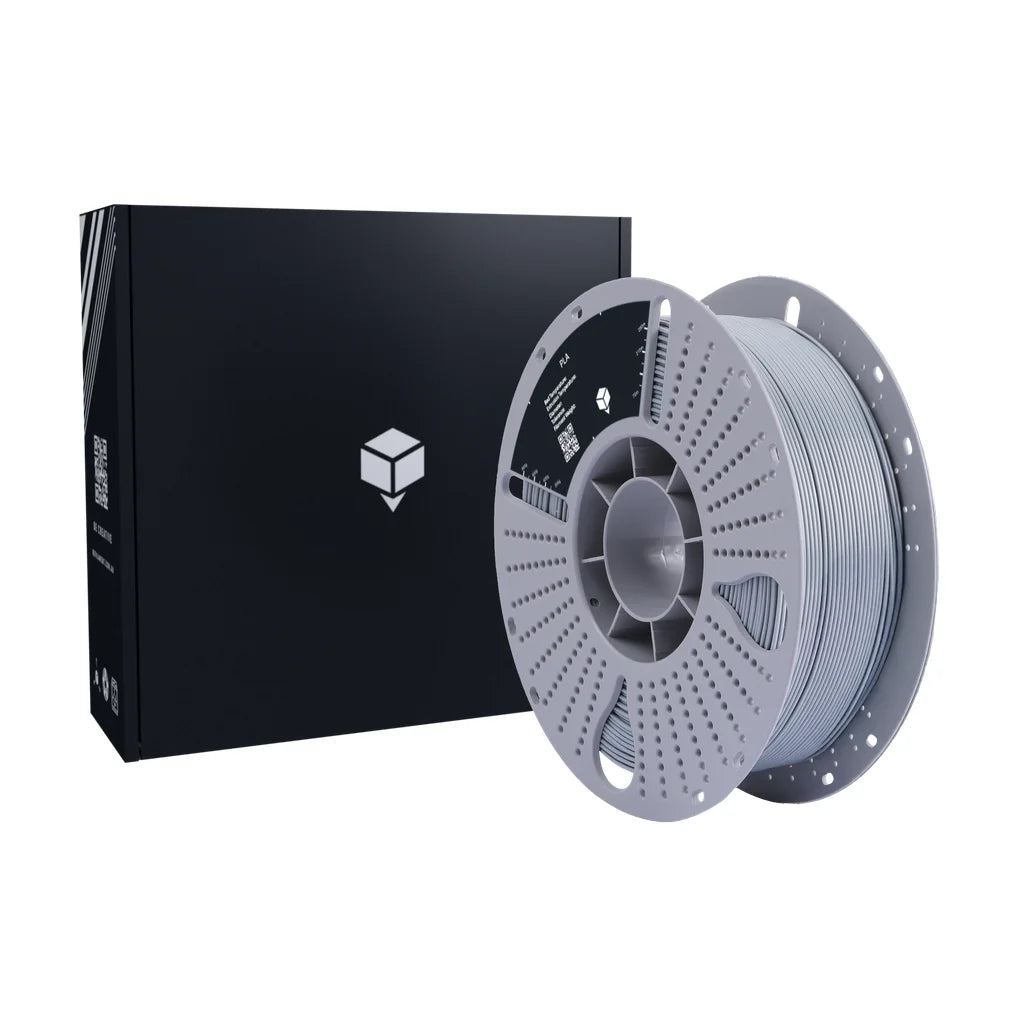
Our PVA is a water-soluble support filament for dual-extrusion 3D printers. Print complex overhangs and intricate cavities with confidence, then simply dissolve the supports in water for a clean, mark-free finish on every supported surface.

1 product

About PVA Support Filament

PVA (Polyvinyl Alcohol) is a water-soluble support filament designed for use with dual-extrusion 3D printers. Rather than snapping or cutting supports away after printing, PVA supports are removed by submerging the finished part in water, where the PVA dissolves completely and leaves behind a clean surface with no tool marks, scarring, or residual material.

PVA is primarily paired with PLA as the build material, as both materials print at similar temperatures and bond well at the interface. Because the PVA dissolves rather than being removed mechanically, it is particularly effective for complex geometries, overhanging features, and intricate internal cavities where conventional supports would be difficult to reach and remove without damaging the part.

PVA is highly hygroscopic and degrades rapidly when exposed to humidity. Unlike most build filaments that merely print poorly when wet, moisture-contaminated PVA becomes brittle and unusable. Storage in a sealed container with desiccant is essential from the moment the spool is opened, and the spool should not be left loaded in the printer between sessions without a dry enclosure.

When to Choose PVA Support Filament

PVA is the right choice when a model has overhanging surfaces, bridging, or enclosed internal cavities that require support, and where surface quality on supported faces is critical. It eliminates the risk of damaging visible surfaces during de-supporting and enables organic shapes and complex internal geometries that would be impractical with manually removed supports.

PVA requires a dual-extrusion printer. It cannot be used on a single-nozzle machine and is not a standalone build material. Compatible printer setups include dedicated dual-nozzle machines and multi-material systems such as the Bambu Lab AMS and Prusa MMU.

PVA is not cost-effective for geometries where standard PLA supports remove cleanly with minimal surface marking. For straightforward prints with simple overhangs, well-configured standard supports or breakaway support filament are more economical alternatives. PVA is best reserved for prints where support removal would otherwise compromise finish quality or structural integrity.

PVA vs Alternative Support Methods

The choice of support method depends on printer capability, part complexity, and how much surface finish on supported faces matters. PVA delivers the best post-support surface quality of any common method, at the cost of requiring dual-extrusion hardware and careful material management.

Property PVA HIPS Breakaway Support Standard PLA Supports
Removal method Dissolve in water Dissolve in limonene Snap off manually Remove manually
Compatible base material PLA, PETG ABS, ASA Most materials Any
Surface quality after removal Excellent Good Moderate Variable
Dual extrusion required Yes Yes No (single or dual) No
Storage requirements Sealed with desiccant Standard dry storage Standard dry storage Standard dry storage

HIPS is an alternative soluble support material, but it is paired with ABS rather than PLA and requires limonene as the dissolving agent rather than water. Breakaway support filaments are easier to manage and work with almost any build material, but leave more visible marks on supported surfaces. Standard PLA supports require no second material and are suitable for most everyday prints.

If PVA isn't the right fit for your workflow, explore our PLA or PETG filament collections as primary build materials, or our full range of engineering filaments.

Printing PVA Successfully

PVA prints at a nozzle temperature of 190–210°C with a bed temperature of around 60°C, which aligns with the typical settings for PLA. This makes PVA straightforward to pair with PLA in a dual-extrusion setup without requiring separate temperature profiles.

Print PVA dry. Load PVA directly from sealed storage immediately before printing. Do not leave PVA loaded in a printer nozzle or on an exposed spool between sessions; even a few hours of humidity exposure can cause stringing, bubbling, and inconsistent extrusion. If printing resumes the following day, remove and reseal the PVA spool.

Print speed and interface settings: Reduce PVA print speed to around 20–30mm/s, particularly at the interface layer where it contacts the build material. A lower interface speed ensures clean bonding between the support and the part. Configure your slicer to purge between material changes to avoid colour contamination of the PVA. After printing, dissolve supports by submerging the part in room-temperature water; larger PVA volumes may take several hours and benefit from agitation or warm water.

Printer Compatibility

PVA requires a printer capable of printing two materials simultaneously or sequentially within a single build. A single-nozzle printer cannot use PVA as a support material.

  • Dual-nozzle printers: Dedicated dual-hotend machines, such as those from Ultimaker or BCN3D, are the most common PVA printing setup. Each material has its own nozzle, which minimises cross-contamination and allows reliable interface layers.
  • Multi-material systems: The Bambu Lab AMS (Automatic Material System) and Prusa MMU3 can print PVA as a support material through a single nozzle with purging between materials. Results depend on purge volume and slicer configuration.
  • Temperature range: PVA's nozzle temperature of 190–210°C is compatible with any printer capable of printing PLA. No specialised hotend is required.
  • Nozzle size: A standard 0.4mm brass nozzle is suitable for PVA. PVA is not abrasive and does not require hardened steel.
  • Bed: A heated bed at 60°C with a PEI surface provides reliable first-layer adhesion. Cooling fan settings should match PLA recommendations.

Confirm that your dual-extrusion or multi-material setup can reliably purge between materials before committing to PVA for a long print, as contamination of the PVA nozzle with build material can cause clogs.

PVA Support Filament FAQs

Submerge the finished print in room-temperature or warm water. Small support volumes may dissolve within 30–60 minutes; larger volumes can take several hours. Warm water (around 30–40°C) and gentle agitation speed up the process. Once the PVA has fully dissolved, rinse the part with clean water and allow it to dry before use.
PVA is primarily designed to pair with PLA, as both materials print at similar temperatures and adhere well at the interface layer. PVA can also be used as a support material for PETG in some setups, though interface adhesion and separation quality vary. It is not compatible with high-temperature materials like ABS, ASA, or nylon, which require print temperatures that degrade PVA.
Stringing and inconsistent extrusion are almost always caused by moisture absorption. PVA degrades quickly when exposed to ambient humidity. If the spool has been left open or loaded in the printer between sessions, it has likely absorbed enough moisture to affect print quality. Dry the spool at 45–50°C for 4–6 hours and return it to sealed storage. If stringing persists on dry filament, check retraction settings and reduce print speed.
Store PVA in a sealed airtight container or vacuum bag with fresh silica gel desiccant immediately after use. PVA absorbs moisture faster than almost any other filament and cannot be easily recovered once significantly degraded. Do not leave PVA loaded in the printer between sessions unless the printer has a sealed filament storage system. Reseal after every print session without exception.
PVA dissolved in water produces a non-toxic solution that is safe to dispose of down a standard household drain. The water can be reused for dissolving further prints, though its effectiveness decreases as the PVA concentration increases. Once the solution becomes very viscous or noticeably thick, replace it with fresh water for the best results.