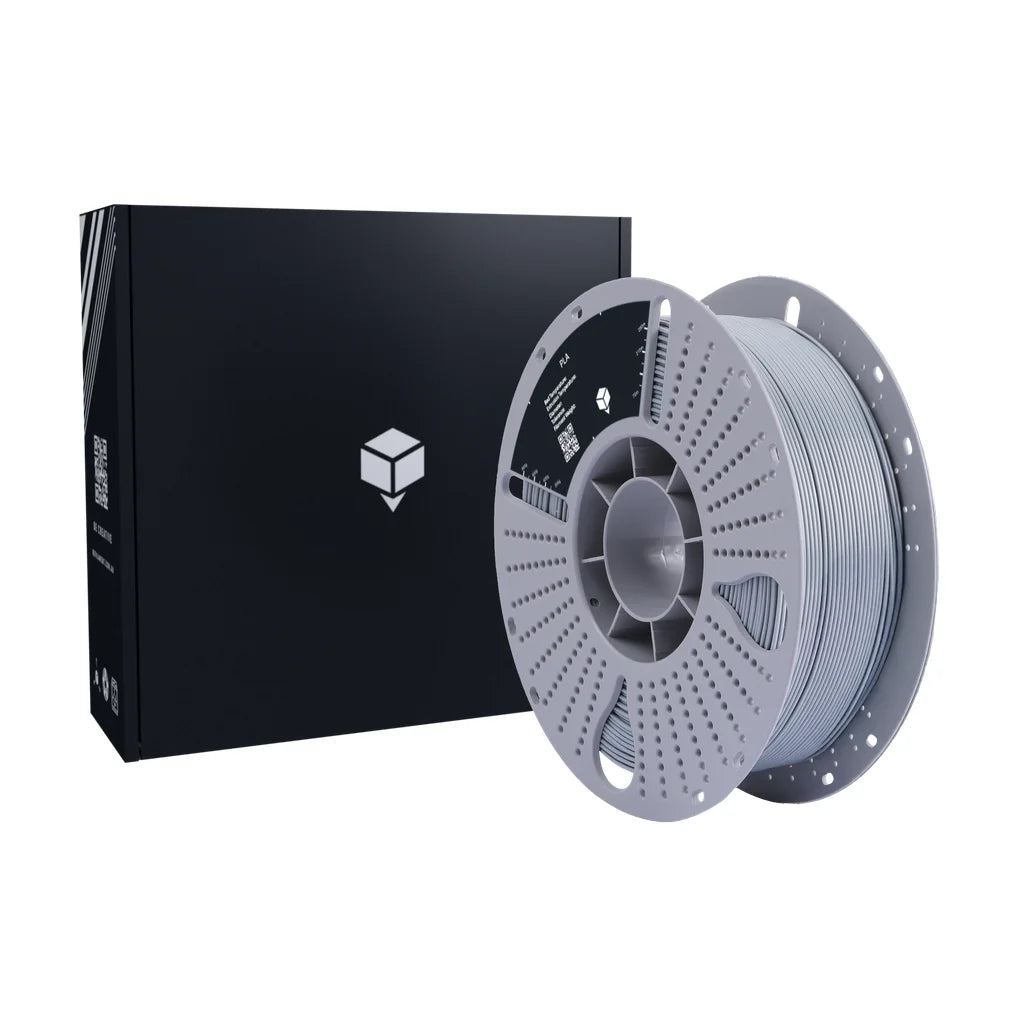

Collection: ASA

Discover our high-performance ASA filament, known for its exceptional durability and UV resistance. Ideal for outdoor and industrial 3D printing projects, ASA provides superior strength, stability, and weatherability compared to other filaments.

3 products

About ASA Filament

ASA (Acrylonitrile Styrene Acrylate) is an engineering thermoplastic specifically designed to withstand outdoor conditions and UV exposure. Chemically similar to ABS, ASA offers comparable mechanical strength and heat resistance while adding exceptional UV stability and weather resistance. This makes it the material of choice for outdoor functional parts, automotive applications, and any component requiring long-term exposure to sunlight without degradation.

ASA combines the best properties of ABS with outdoor durability. It maintains excellent impact resistance, high heat tolerance (95-100°C), and strong layer adhesion while resisting UV-induced yellowing, brittleness, and degradation. The material is widely used in automotive exterior trim, outdoor enclosures, garden equipment, architectural models, and marine applications. Like ABS, ASA can be post-processed through acetone vapour smoothing for a professional glossy finish and accepts paint, primer, and adhesives readily. Our ASA filament is manufactured to tight tolerances of ±0.02mm at 1.75mm diameter for consistent, reliable performance.

While ASA requires similar printing conditions to ABS—including an enclosed build chamber and heated bed—it produces slightly less odour during printing and offers superior long-term durability in demanding environments. The material's slight flexibility prevents brittle failure under stress, making it suitable for functional mechanical assemblies, snap-fit parts, and components subject to regular outdoor use. ASA maintains dimensional stability under heat and resists chemicals, oils, and moisture better than PLA or PETG.

When to Choose ASA Filament

Choose ASA when your parts will face outdoor conditions, direct sunlight, or weathering that would degrade other materials. It's essential for automotive exterior parts, outdoor enclosures and housings, garden fixtures, architectural models, marine components, and any functional part requiring UV resistance. ASA excels where ABS would yellow, become brittle, or fail due to sun exposure.

Select ASA for applications requiring the mechanical strength and heat resistance of ABS with the added benefit of outdoor durability. Common uses include custom car parts (mirror housings, trim, brackets), outdoor camera enclosures, weather station components, RC vehicle bodies for outdoor use, garden tool handles, pool and spa equipment, and signage that maintains colour and integrity over years of sun exposure.

ASA suits intermediate to advanced users who have printers with heated beds and enclosed build chambers. The material requires similar attention to temperature control and ventilation as ABS, making it less suitable for beginners or those without proper printer hardware. Users familiar with printing ABS will transition to ASA easily, as the printing parameters are nearly identical with improved outdoor performance.

Consider alternatives if your parts will remain indoors without UV exposure (use ABS for similar properties at potentially lower cost), if you need the easiest printing experience (use PLA or PETG), or if you lack an enclosed printer and proper ventilation. For purely indoor functional parts where UV resistance isn't required, ABS offers comparable strength. For outdoor parts not requiring high strength, PETG provides moderate UV resistance with easier printing.

ASA vs Alternative Filaments

Understanding how ASA compares to other engineering materials helps you select the right filament for outdoor and demanding applications. ASA's UV resistance sets it apart from mechanically similar materials, making it invaluable for long-term outdoor use.

Property ASA ABS PETG PLA
UV Resistance Excellent Poor Moderate Poor
Heat Resistance 95-100°C 90-100°C 70-80°C 50-60°C
Print Difficulty Moderate to hard Moderate to hard Moderate Easy
Typical Applications Outdoor parts, automotive Indoor functional parts Indoor mechanical parts Indoor models, prototypes
Weather Resistance Excellent Poor Moderate Poor

ABS offers similar mechanical properties but degrades under UV exposure, making it unsuitable for outdoor use. PETG provides moderate UV resistance and easier printing but lacks ASA's heat resistance and long-term outdoor durability. PLA degrades quickly outdoors and cannot withstand the temperatures or conditions that ASA handles easily.

If ASA isn't the right choice for your application, explore our ABS, PETG, or PLA filament collections for alternative materials.

Printing ASA Successfully

ASA prints nearly identically to ABS, requiring careful temperature control and environmental stability. The material rewards proper setup with exceptional functional parts that maintain their properties through years of outdoor exposure.

Temperature settings: Nozzle temperatures typically range from 230-270°C, with most users finding success around 240-250°C. Bed temperature should be set between 100-120°C, with 110°C being a common starting point. Higher bed temperatures improve first-layer adhesion and reduce warping. ASA's printing temperature range matches ABS, so existing ABS profiles often work well with minor adjustments.

Environment and hardware: An enclosed build chamber is highly recommended to maintain stable ambient temperature and prevent warping. Without an enclosure, parts are prone to corner lifting and layer separation, especially on larger prints. A heated bed with good adhesion surface (PEI sheet, ASA slurry, or hairspray on glass) is essential. Disable part cooling fans or run them at minimal speed (0-25%), as ASA benefits from slow, even cooling for optimal layer bonding and reduced warping.

Common challenges: Warping and layer adhesion are the primary concerns, identical to ABS. Minimise warping by ensuring stable ambient temperature, proper bed levelling, good first-layer squish, and using a brim or raft for parts with small bed contact. If layers aren't bonding well, increase nozzle temperature in 5°C increments. ASA produces less odour than ABS but still requires adequate ventilation. The material is hygroscopic—store it properly and dry it if you notice bubbling or poor surface quality during printing.

Printer Compatibility

ASA works on the same printers that successfully print ABS. The material requires heated bed capability and benefits significantly from an enclosed build chamber for consistent results and reduced warping.

  • Enclosed printers highly recommended: Printers like the Prusa MK4S with enclosure kit, Bambu Lab P1S/X1C, and Creality K1 series maintain stable temperatures and prevent warping. Even budget enclosures or DIY solutions dramatically improve results. Enclosures are more important for ASA than for materials like PETG or PLA.
  • Open-frame printers possible but challenging: Can print ASA but with greater difficulty and higher failure rates on larger prints. Warping is more common, and ambient temperature fluctuations affect print quality. Success depends on room temperature stability and part geometry. Adding an enclosure transforms open-frame printer performance with ASA.
  • Direct drive vs Bowden: Both work well with ASA. Direct drive offers slightly more consistent extrusion, but properly tuned Bowden systems print ASA reliably. Retraction settings may need adjustment for Bowden setups to minimise stringing.
  • Heated bed essential: Printers without heated beds cannot reliably print ASA due to severe warping and poor adhesion. Bed temperatures of 100-120°C are required for successful prints.

Most modern printers from Prusa, Bambu Lab, Creality, AnyCubic, and Elegoo can print ASA when properly configured with enclosures. Check that your printer can maintain bed temperatures of at least 100°C and nozzle temperatures up to 270°C. All-metal hotends are recommended for sustained high-temperature printing.

ASA Filament FAQs

ASA and ABS have similar mechanical properties, strength, and heat resistance, but ASA offers superior UV resistance and weather durability. ABS degrades, yellows, and becomes brittle when exposed to sunlight, while ASA maintains its properties and colour for years outdoors. ASA also produces slightly less odour during printing. Choose ASA for outdoor parts and ABS for indoor functional parts.
ASA parts can last 5-10+ years outdoors with minimal degradation when printed properly. The material maintains colour, mechanical properties, and structural integrity through continuous UV exposure, temperature cycling, and weather conditions. Actual lifespan depends on print quality, UV intensity, and environmental factors. ASA significantly outperforms PLA, ABS, and PETG in outdoor longevity.
Yes, ASA responds to acetone vapour smoothing similarly to ABS, allowing you to achieve a glossy, professional finish by dissolving the surface layer. You can also sand ASA easily and apply primer and paint for refined appearances. This post-processing capability makes ASA ideal for automotive parts and outdoor components requiring a polished look.
Store ASA in an airtight container with silica gel desiccant to prevent moisture absorption. While less hygroscopic than nylon or PETG, ASA can still absorb moisture over time, leading to printing issues like bubbling, stringing, and poor layer adhesion. If ASA has absorbed moisture, dry it in a filament dryer at 65-70°C for 4-6 hours before printing.
ASA emits fumes during printing, though generally less odorous than ABS. Always print in a well-ventilated area, use an enclosure with filtration or ventilation directing fumes outside, and avoid prolonged exposure in enclosed spaces. Proper ventilation is essential for safe ASA printing. Many users find ASA more tolerable than ABS while still requiring precautions.